عرض المحتوى الأصلي بـ `en-gb` بانتظار ترجمة هذه اللّغة.
فهم التهديدات والتغيّرات
Cyberattack disrupted refrigeration at French supermarkets
What happened in the France supermarket refrigeration attack?
Attackers changed refrigeration settings at hundreds of French supermarkets, making fresh and frozen stock unsafe to sell.
CERT-FR reported compromises involving several controller families and said on 13 October that attacks might still be under way. It did not identify the attacker or confirm how the systems were first accessed.
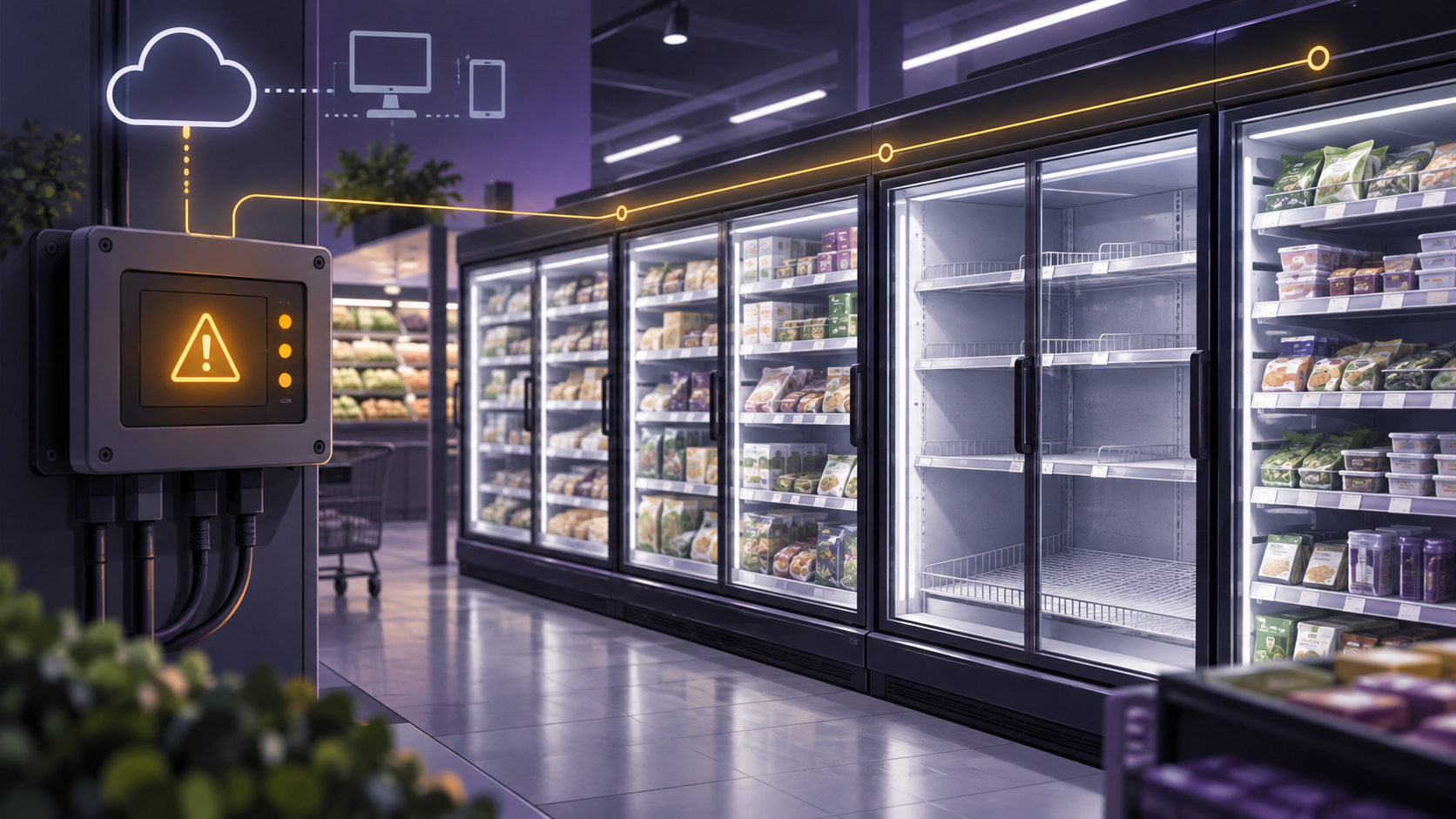
On 12 October 2026, a cyberattack changed refrigeration settings at supermarkets across France. Stores discarded fresh and frozen stock; the finance minister put the number of affected supermarkets at about 700 out of 10,000 1مرجع 1: French cybersecurity authority warns attack may be ongoing as stores scramble to restock.
CERT-FR reported compromises involving Danfoss AK-SM and AK-SC controllers, then added Copeland XWEB and Dixell XWEB systems. It said on 13 October that attacks might still be under way 2مرجع 2: Incident de sécurité ciblant les contrôleurs à distance des installations de réfrigération. The agency did not identify the attacker or confirm how access began.
Why a fridge controller mattered
These systems keep food cold. Changing a setting remotely can turn a digital intrusion into wasted stock and disrupted work. A refrigeration controller is like a thermostat for a store’s cold rooms: changing the setting changes the food’s temperature, not just a number on a screen.
CERT-FR warned operators not to expose management interfaces directly to the internet [2]. It recommends removing public access, using a protected network or VPN for remote maintenance, installing current firmware and changing default passwords.
Resetting an affected controller is only the first step. CERT-FR warns that a reset does not fix an unsupported device that remains exposed; it could be compromised again. Operators also need to know how they will monitor temperatures and restore service if remote access is shut off. That is a practical lesson from the incident, not a report about what affected stores had arranged.
What operators should check
List the devices that control refrigeration and name who maintains each one. Ask the provider which systems can reach them, how remote sessions are approved and what happens if access has to be shut off. Confirm who can check temperatures and return the equipment to safe operation.
Remote control over equipment that supports essential work belongs inside the business’s security boundary. Our analysis of how attackers could use smart devices looks at a different risk from connected equipment.